Showing posts with label kids rights. Show all posts

Wednesday, September 12, 2012

Weary Wednesdays: Pole-Dancing Fitness Class For Kids

Trends! Don’t you just love them? There is always some new idea, product or activity that is promoted and popularized through mass media. These trends, however, are almost always aimed at women and the majority of them revolve around physical appearance and/or how to better perform one's social roles. While the pressure on maintaining a particular physique may be on the rise in younger men and boys, the majority of the pressure is placed on women and girls. These trends are reinforced through various mediums including but not limited to: websites, magazines, television, film, advertising, and books.
From how to stop one’s skin from wrinkling, drying, flaking, sweating, sagging –to how to lose 2 pounds a day before your big day! All the way to strip aerobics fitness DVDs, the neo-burlesque movement, 50 shades of grey, vampire stalker movies, anti-aging products, celebrity-endorsed diets, and "body shapers" aka. suction undies. 

It is likely that all of these fads are connected to one another as women are sold the same idea with each one; that our physical appearance is paramount in defining our value as people. The companies behind these trends inform us that it is empowering to be within the male gaze, to put all of our energy into arousing heterosexual male desire, to be detached from our whole selves rather than be respected for our minds, our ideas and our actions. 

This, they say, is power for women.

Marketers and their focus groups inform us, and the rest of the society, that our bodies need to be sculpted, surgically altered, constrained, whitened, waxed, and objectified. Porn culture, or the the normalization and infiltration of porn into everyday life, has lead to activities such as stripping/pole-dancing, lap-dancing, and burlesque becoming popular within the dominant culture and among some middle to upper-middle class women.
However, due to today’s limitless marketing as well as the ubiquitous presence of mass media and social networking, children are taking up some of these trends themselves. 

Pole-dancing fitness classes gained popularity with adults several years ago; some were even setting up poles in their homes and attending stripping aerobics classes, granted they had the funds to do so.  Now some fitness instructors have been inspired to start up pole-dancing fitness classes for children as young as five. 
Yup! You read right, children's pole-dancing classes. The class circulating through the media is being offered on Vancouver Island in British Columbia. It costs about $70 per one hour class and explicitly intended for children. Unlike "spinning classes" which usually refer to riding a stationary bicycle, this pole-dancing class is euphemistically named “Little Spinners” and involves nothing sexual, according to the instructor. In fact, owner Kristy Craig claims that it is a great workout for kids. 
Photo from National Post - I altered the photo to protect the identity of the child.
Nonetheless, according to the Toronto Sun, Craig is shocked by all of the negative attention that her classes have received. She told the media that she teaches gymnastics moves but instead of a horizontal bar, she uses a vertical pole. "It’s nothing new,” Craig said, remarking that pole-dancing competitions are already offered in Russia and the U.K. “People need to really look into it before jumping to any conclusions about what I’m offering.” She argues that pole-dancing has "evolved" into a sport just like any other. “For competitions they actually have rules and regulations that there can be nothing sexual, or any article of clothing removed, and in some you aren’t allowed to wear high heels,” she adds. “The sexuality is being taken out of it. It’s highlighting the gymnastic, athletic and circus acrobatics aspect.”
Another supporter of Craig’s classes, Tammy Morris owner of Tantra Fitness, told the National Post in regards to sexualization that “they have no association with it or think there is anything wrong or bad about it. That’s an adult putting that on them.” In 2010, her Vancouver fitness studio roused public anger when she offered classes to children, predominantly girls, as young as nine and private classes to those as young as five. Morris defends these pole-dancing classes, claiming that the children “love it” and it is not problematic as the girls do not learn how to strip or grind.
Interestingly, on Craig's company's website she features almost only photographs of adult women and adult classes. From the main webpage, which features an advertisement for pink glittery 9 inch stilettos, one would think that the studio was exclusively for adults. Some of the classes listed on the website have names like "Sexy Flexy," "Babes on Bikes," and "Bunny Bootcamp." And yet, all of these classes appear on a posted weekly schedule alongside a class for children.
So, where does the sexualization start and stop? Are there a few days of the week for "Sexy Flexy" classes that are adult-only and one other day of the week that is for a non-sexualized sport class for kids? These are all taught by the same instructor and yet are both, apparently, different. How does one shift from a consciously sexualized pole-dancing class for adults one day to a "this is a serious sport in Russia" class for kids the next day? Why is the class not sexualized when the kids are doing it? Is it because it doesn't have porn-inspired name like "Bunny Bootcamp" which, I'm sure, would have never been considered for the title of the kid's class.
What seems to be missing from the conversation, however, is the realization that everything that circulates in our culture–all activities and all of what we see in the media–have been constructed within a specific society; in a highly pornified and highly misogynistic social environment that is driven by money and dominated by rich white men. 

These classes, despite the Craig’s assertions, are products of a patriarchal, misogynistic industry that thrives on the bodies of women and girls. The sex industry is a daily reality for many women around the world, often as a means of survival and yet, it is becoming a popular fitness trend among privileged women who can afford 120$ pole-dancing classes. 

If fitness and children’s well-being are really the goals of these classes then why not encourage these children to join a sport, go swimming, or explore the outdoors? Why is a sexualized class that costs 70$ an hour better than playing tag or throwing a ball around?

Critical thought is essential when it comes to these issues and all of the messages that we receive through patriarchal popular media. Children are cannot think critically about their activities and the world around them in the same way that adults can. This is why we have an age of consent and why we don’t leave life-altering decisions up to children who have had limited life experience and cognitive development. As adults, as a larger community, we need to step back and question the growing commercialization of childhood and of children. We need to start questioning why children are being so sexualized in the media and why it is being normalized. This normalization impacts children's lives and the way they explore and understand their world. 


Monday, May 14, 2012

Children and Sex-Reassignment: Feminist Concerns


Recently the feminist radio station, The F-Word, based out of Vancouver aired a two-part show on transgenderism and feminism followed by a blog post. The program features interviews with Susan Stryker, Sheila Jeffreys, Lee Lakeman, and Barb Besharat.

The interviews can be accessed on the F-Word blog here (there are various links on this page) 

This post is concerned with the first interview in which Susan Stryker is interviewed.

I want to clarify, first and foremost, because it is always assumed; this is not a post for questioning "whether or not a trans-woman is a REAL woman" or as a debate on trans-identity – not at all, this post is to critique particular surrounding issues and opinions put forth by Susan Stryker, specifically on the topic of children and teens undergoing procedures to make their bodies more "feminine" or "masculine."

Stryker is an Associate Professor of Gender and Women's Studies, as well as the director of the Institute for LGBT Studies. 


This post has no intent to portray Susan Stryker as the spokesperson for the entire trans-community. Furthermore, I know that no one individual can speak for an entire diverse group of people.

As most feminists now know, the relationship between parts of the trans-community and parts of the feminist community has become highly inflammatory recently, and so I was pleased to see all sides being involved the F-word's open, respectful and frank dialogue about the core issues and positions.

I listened to the show because I was intent on understanding all perspectives and experiences. Several elements in the first interview, however, were troublesome, particularly issues relating to "childhood transitioning."

When the question of children and adolescents receiving hormones and surgical procedures to make a body have "feminine" or "masculine" secondary sex characteristics, Styrker responded with a bit of annoyance and then began to give an account of her childhood. Stryker then stated that "kids have a pretty good idea of who they are."

This statement is what troubled me the most.

As a recovering psychology student, I feel confident in debating issues surrounding the human brain and its complex development. My knowledge on child development, which I am quite confident in, has led me to believe that Stryker’s reference to a stabilized self-awareness and self-identity in childhood to be very problematic.

The human brain develops in a generally predictable manner throughout the lifespan, making the cognitive abilities of a five year old vastly different than the level of cognition experienced by a 15 year old. A 15 year olds’ sense of self and cognitive abilities (heavily impacted by the relation to their upbringing, social group and culture) would be vastly different from the cognitive abilities of someone in their early to mid-twenties.* Of course, there are always exceptions to the rule, but this is relevant to the majority of the population.


*early twenties is the age range that the frontal lobe, which deals with problem-solving and reasoning, completes development.


Human brain development and it's impact on cognitive capacity is what the age of consent exists around. 

A child at the age of four, the age Stryker used in her own hypothetical example of childhood transitioning, would have only just grasped complex grammar, let alone a fixed identity. Words for sex difference as well as the culturally and socially constructed roles and expectations would not be understood by a four year old child. Any words or conceptions, however, are culturally-specific in most cases as not all speakers include Anglophone words for the purposes of gendering.

 Children are incapable of abstract thought. Abstract thinking would be required for a child to develop multifaceted notions of self through culturally-specific gender expectations.  In fact, the ability for abstract thought develops between 12-15 years of age, typically. Additionally, theory of mind is only available to adults and involves using one’s knowledge of the world to construct theories to explain their behaviour and the behaviour of others based on internal mental states. Children do not have access to this mental facility which has an essential role in providing informed consent (Lefton et al., 2008, p. 400).

To suggest that children develop a sense of self that is somehow "separate" from a child's social and physical environments and cultures is also debatable. This infers that a child has the  social, physical, cognitive, and neurological capacities of someone in their twenties, who has completed, more or less, physically developing and can take part in abstract thought. If a child is unable to conceptualize difficult theories and culturally-specific notions of “self,” how can that child be expected to exercise informed consent regarding potentially dangerous bodily modifications?

Children learn ways to behave and interact through socialization and learning based on their cultural norms, they form identities based on their surroundings and experiences. This does not mean children are less-able, or naive; it merely means that humans develop throughout time and are not fixed "selves." Human sense of self, which in and of itself, varies greatly among cultures as not all cultures and social groups favour the idea of "the individual" is not fixed.

The individual human being–throughout the lifespan– is constantly being re-shaped, re-figured and re-conceptualized in relation to that human’s social, cultural, and physical environment. There is no such thing as a fixed "self" that originates in childhood and transcends throughout the lifespan. If this were factual, human evolution would have failed long ago as it relies on adaptation. Nothing organic in this world is fixed–everything is malleable, particularly the incredibly plasticized brains of humans (particularly children).


Children are rapidly gaining new experiences in particular cultures and environments that are shaping their cognition, relation to and interaction with others, as well as their sense of place in the world. It is simply irresponsible to suggest that children should be trusted with deciding whether or not their parents should put them on hormonal drugs or through life-altering surgical procedures.

The common arguments in favour of childhood tranisitoning do not address the Western medical communities’ insistence on paying so much attention to the outward appearance of one’s genitals in relation to defining female and male bodies. There are only these two options given by the medical community, a very essentialist approach that disregards the extensive anthropological evidence for gender fluidity across cultures (Sharp, 2001, p. 308).  Also, there is a lot of money to be made in these biomedical industries, particularly industries concerned with body alteration. The industry is extremely profitable, and as Stone (1991) points out, there has been a propagation of a very lucrative international clinical trade in sex reassignment that extends from Palo Alto, CA, to Casablanca, Morocco (as cited in Sharp, 2001, p. 308).

But I digress…

In the interview, Stryker points out that Sheila Jeffreys (another featured interview) has a  “new thing” for discussing early transition-surgeries or hormone replacements in children as a “genocide” and a type of “eugenics” of children.

As far as I have read, Jeffreys has used these words in regards to childhood transitioning because they are children are unable to give informed consent. When children are involved, the debate transforms from one about informed consent and adult decision-making to one that assumes children can make these types of permanent decisions about their bodies, too–regardless of their feelings of identity or gender. Nevertheless, Stryker's placement of the critique of the medicalization of bodies (particularly of children's bodies) as being akin to verbal attacks and hateful behaviour towards the trans-community is unfair. They are not the same and framing them as such merely shuts down all discussion.

Furthermore, the chemical and physical alterations to children's bodies would include the sterilization of girl-children. Jeffreys, like many other feminists, do not have to look far into the past to see the extensive sterilization abuse of countless numbers of women and girls. This is a legitimate feminist concern, in my humble opinion. The chemicals that given to children include puberty-blockers, which are incredibly expensive and have long term consequences if used over time, including cancer and blood clotting. However, the impacts of these drugs are reversible, unfortunately surgery is not…

One report cited by CTV news clarifies the use of puberty blockers:
“97 girls and boys treated between 1998 and 2010; the youngest was 4 years old. Kids that young and their families get psychological counselling and are monitored until the first signs of puberty emerge, usually around age 11 or 12. Then children are given puberty-blocking drugs, in monthly $1,000 injections or implants imbedded in the arm”

Any chemical or bodily alteration given to a child, in my opinion, is ethically questionable. As someone who was given pharmaceutical drugs during childhood, I have harsh feelings surrounding the issue of medicating kids. I believe children should not become medical guinea pigs and should not be given chemicals and surgeries that can have lasting impacts on their bodies and minds. Children should be given the chance to explore themselves and their surroundings in a way that is not based around strict expectations of gender. This is clearly an important issue for feminists everywhere as one of feminism's goals is to expose and oppose abuses against the bodies of women and girls all over the world and throughout history. 


Feminist principles also reject the growing medicalization of human bodies. Most feminists are appalled when stories circulate about girls being put into tanning beds, paraded on stage in hair-extensions and fake eyelashes or posed like a porn star in high-end fashion magazines. The majority of feminists express concern over a society that is obsessed with “perfecting” bodies in the cosmetic surgery industry. Why, then, would feminists just sit back on the topic of giving a 8 year old girl-child hormone replacement drugs that block puberty and or have her undergo permanently life-altering surgeries?  I realize the debate is a contentious, emotional and often offensive one, but simply shutting down discussion because it is controversial serves no purpose and ignores many genuine concerns. 


I hope all of my readers get a chance to listen to the interview with Susan Stryker as well as the remaining two interviews -- I found the broadcast to be fair and responsible, informative and intriguing. I guarantee that you will learn plenty from both sides of the debate.


Notes:
Lefton, Brannon, Boyes, Ogden. (2008). Psychology. Child Development. p. 395.
Sharp, L.A. (2001). Commodification of the Body and its Parts.
CTV News (2012). Transgender kids get puberty-blocking drugs, hormones. Retrieved from  http://www.ctv.ca/CTVNews/Health/20120220/transgender-puberty-treatment-children-20120220/#ixzz1ufv5GiML
Art: “Untitled (your body is a battleground)” by Barbara Kruger, 1989


Thursday, February 23, 2012

Porn Culture and Children: CBC Documentary "Sex't Up Kids"

Tonight CBC television will feature a documentary called "Sex't Up" which looks at the growing sexualization of girl-children, the increase in young boy's access to hardcore pornography, and how it is all impacting young people's notions of sex and sexuality as well as their self-esteem, and self-worth.


One of the previews for the documentary summed it up pretty well. Featured was a mother and her daughter, watching of Katy Perry's "California Girls" music video. During the video, the mother said to her daughter, "how often do you see Bono humping cotton candy, half naked, in order to sell his music?"

I chuckled loudly, but realized how pathetically accurate this mother was. Why are women and girls taught that the only way they can get ahead in life or gain any respect is through performing sexuality - through appearing to be nothing more than a one-dimensional caricature of sexiness. Men can gain respect without gyrating, humping or taking their clothes off...

But I digress...

CBC's website provides some statistics from the film:

Pre-teen clothing market is worth an estimated 150 billion dollars a year.
A survey of 15 major pre-teen clothing sites found that 1/3 of apparel was considered 'sexualized'.
A recent survey showed that 22% of teenage girls report anal sex in the last 60 days.
It's estimated that 70-80% of teenage boys watch pornography.
Another survey showed that 1/3 of admits to sending a naked or near naked picture to their 'crush'

The documentary will be speaking to young children and teens about their own experiences navigating porn culture. So please, please check out this documentary tonight as it is airing on Doc Zone at 9 pm Eastern and Pacific time.


*** If you want to watch the film online, it is now available streaming here ***

Tuesday, October 18, 2011

This Has to Stop

More kids are getting bullied and more kids are killing themselves. A large number of these kids are LGBT youth and it seems to be getting worse for them these days. Another young person in Canada ended his life on Friday. Jamie Hubley was openly gay. For being open with his sexuality and having a love for figure skating, he experienced severe bullying and even an assault. Jamie was 15 years old.


This is out of control.


Rest in Peace, Jamie

Wednesday, August 17, 2011

Psychology, Pedophilia and Patriarchy - The Three P's of this Post

          ***TRIGGER WARNING FOR SEXUAL ABUSE***

This past May I wrote a blog called "DSM-V Presents "Paraphilic Coercive Disorder" which was basically a jargon-filled name for "Rapist Disorder." In the post, I expressed concern about the DSM V and its impact on victims of rape and violence and this concern has not been lost. There appears to be more controversial buzz surrounding the DSM V and it has left me with a sour gut. This time, however, the proposed revisions for the DSM V have ignited a reaction from a pedophile support group called B4U-ACT. This group is composed of people who claim to be "minor attracted people" rather than pedophiles and who do not actually rape or abuse children. They claim to be attracted to children and do not act out on their "impulses" and assert to help pedophiles avoid physically harming children. They feel the DSM V is being unfair with a proposed revision on pedophilia. 


Before getting started on the article that brought this all to my attention, I took it upon myself to go to the DSM V website and look at the revision list for pedophilia. This is what I found:


Pedohebephilic Disorder
A.    Over a period of at least six months, one or both of the following, as manifested by fantasies, urges, or behaviors:
(1)    recurrent and intense sexual arousal from prepubescent or pubescent children [5]
(2)   equal or greater arousal from such children than from physically mature individuals [6]

B.     One or more of the following signs or symptoms:
(1)   the person has clinically significant distress or impairment in important areas of functioning from sexual attraction to children
(2)   the person has sought sexual stimulation, on separate occasions, from either of the following:
(a)    two or more different children, if both are prepubescent
(b)   three or more different children, if one or more are pubescent [7]
(3)   repeated use of , and greater arousal from, pornography depicting prepubescent or pubescent children than from pornography depicting physically mature persons, for a period of six months or longer [8]

C.     The person is at least age 18 years and at least five years older than the children in Criterion A or Criterion B.

Specify type:
Pedophilic Type—Sexually Attracted to Prepubescent Children (Generally Younger than 11)
Hebephilic Type—Sexually Attracted to Pubescent Children (Generally Age 11 through 14)
Pedohebephilic Type—Sexually Attracted to Both


Specify if:

In Remission (No Distress, Impairment, or Recurring Behavior and in an Uncontrolled Environment): State duration of remission in months: ____
In a Controlled Environment


***
Information obtained from http://www.dsm5.org 
All information belongs to the American Psychological Association, 2010
***

What follows will be the article from the Salon and my commentary added in bold. To read the article uninterrupted by my commentary, see here. 


We usually hear pedophilia talked about in terms of mental illness -- if not evil -- but Aug. 17 a motley crew of self-identified "minor-attracted persons" and mental health professionals have gathered in Boston to talk about it as a sexual identity. [This appears to be an example of "identity politics" and its merger with the psychology community] At hand is an issue deeply important to both groups: the revision of the diagnostic criteria for pedophilia.
The sponsor of the event, B4U-ACT, a support group aimed at preventing pedophiles from acting on their attraction to children, hopes to influence the relevant entry in the upcoming revision of the Diagnostic and Statistical Manual of Mental Disorders. [I am glad people want to prevent pedophiles from raping kids but why are we viewing pedophilia as some legitimate "condition?" How can we assume that pedophilia is a naturally occuring disorder that some people are just "born" with? We must think critically about such things rather than passing them off as something inevitable or even natural. What does that say about our society? ] Understandably, the idea of pedophiles helping to define their own mental illness has some unnerved. [Obviously! When one thinks about the victims of child sexual abuse and how often they are silenced, one's mind does not then think about the poor pedophiles who don't actually rape kids but likely think about raping children. Why not give a voice to the victims of abuse instead of giving a voice to those who contribute to an oppressive society?] Earlier this week, the Daily Caller wrote about the event in a piece headlined, "Conference aims to normalize pedophilia." It's true that many in the community believe that attraction to pubescent or pre-pubescent children isn't a mental illness at all, but the symposium itself has the stated aim of raising awareness about fundamental problems with the proposed revision to the DSM's entry on pedophilia.
Richard Kramer, director of B4U-ACT, argues that the panel of experts responsible for the revision "represents only the narrow field of sex offender assessment and treatment." He believes it's important to also represent minor-attracted folks  who have not offended and would like to keep it that way: "[The panel] bases its work almost exclusively on assumptions about, and research on, sex offenders, who do not represent minor-attracted people in the general population," he wrote me in an email. "As a result, the DSM includes inaccurate and misleading information and ignores the existence of minor-attracted people who are law-abiding." 
[This proposed "title" of "Minor Attracted People" is incredibly offensive and degrading to the victims of childhood sexual abuse and to those who are exploited to facilitate the "fantasies" of pedophiles who may not physically harm a child. Regardless of whether or not they offend,  these people still consume children in one way or another because they, as adults - as mostly male adults - have that power. They objectify children who do not have the same social power or rights as they do  which is why their "title" for themselves and their "cause" is so harmful.] 

It might seem counterintuitive for non-criminals to fight to be recognized alongside criminals, but B4U-ACT sees this as a way of fighting the stigmatization of attraction to children and the conflation of pedophiles with child molesters. [There should be a stigmatization because children do not have the social power or the life-experience to understand or consent to being an object of a grown man's gaze .] Of course, "pedophile" has become cultural shorthand for "abuser" for good reason: We fear they will act on their attraction to children. An article on the DSM debate in the Harvard Mental Health Letter says the scientific evidence supports that concern: "Several reports have concluded that most people with pedophilic tendencies eventually act on their sexual urges in some way. [Exactly - and more so when they form "support" groups that aim for the general populis to feel sympathetic for their pedophilia. The support group itself merely perpetuates the victim-blaming and victim-silencing tendencies of our patriarchal society ] Typically this involves exposing themselves to children, watching naked children, masturbating in front of children, or touching children's genitals." Kramer and his ilk argue that such scientific wisdom is based on skewed data that looks only at offenders, and that many child molesters are not technically pedophiles (i.e., they offend because of opportunity, not sexual attachment).
Such claims seem rather dubious when visiting a message board like Boy Chat, where it's easy to find men discussing how society just doesn't understand that many "young friends" enjoy having a friendship with a "boy lover." [Again we see that pedophiles have a voice - they also have access to the voices of other pedophiles to assure them that their "way of life" is bona fide]. There are no mentions of sexual activity with children, as such posts are forbidden, and posters are effusive about how they would never think of "hurting" a child -- but one gets the sense that they're operating under a different understanding of "hurt." Most of the discussions focus on feelings of love and tenderness for young boys; it's all very reminiscent of how Michael Jackson would talk about his friendships with children. There are also conversations about how to find a "YF" -- for instance, one man says he is renting a room in his house to a woman with custody of her grandsons. He writes, "The boys have taken to me, naturally, and my landlady loves me. I'm taking it slow, but I've already been trusted to watch the boys ... another night coming this week; an overnight. They're cutie pies." 
There is a general consensus within the medical community that pedophilia is a sexual orientation and as such is unlikely to change, so treatment focuses on helping them to suppress their desires through psychotherapy and medication. [Oh, a sexual orientation?  How can anyone say that pedophilia is as sexual orientation, as if pedophilia is a type of "queer lifestyle" or even relevant to sexuality. They are attracted to power - to defeating, colonizing and consuming children.  Pedophilia is not about consensual sexual activity or romantic love. Also,  just because the pedophile is "unlikely to change" doesn't mean that we should be welcoming support groups that defend men's abuses against children,  both in fantasy and acted out on a child! But, who is surprised? The DSM V is now saying that rapists have a "condition" that makes them rape, silencing the voices of rape victims, almost all of which are women. It appears to  all goes back to maintaining power in the hands of men and silencing the victims of male violence] Fred Berlin, director of the Sexual Behavior Consultation Unit at Johns Hopkins and an expert presenter at today's event, compares it to the sort of treatment people with drug addiction or alcoholism go through. 
[Whoopsie Daisy! I guess the pedophile had a "relapse." To0 bad that their relapses include victimizing children] 

"They need to learn to not give in to cravings [Whaddya know! Pedophiles can have "cravings" for children akin to alcoholics craving a bottle of cheap port. Children are things!] which are satisfying and very pleasurable but which their intellect and their conscience and society is telling them they ought not to act on," he told me by phone. "Now, can everybody succeed? No, but there are large numbers of people who experience these attractions and with proper help go on and don't continue to offend.  There is good evidence to show that that's the case."
He says many pedophile activists [What's next, "rapist activists"?  - they don't really rape, they just want to...)] are concerned that the term "has become a stigmatizing pejorative," a way of saying "that somebody is less than human."[Like the way you feel about children?] They're unlikely to get much sympathy from the general public for being stigmatized, but Berlin says it's in society's best interest to resist demonizing them. "The idea is to try to get folks who are sexually attracted to children to come forward and get help before acting so that children are not harmed," he said. [That's great that you want to stop pedophiles from physically victimizing children but when you start saying it is "activism" and making up chat rooms to talk about "loving boys" - you've attempted to create harm, rather than prevent it. These trends towards normalizing men's entitlement to women and children are terribly harmful.] "That's certainly a goal that I would fully support." He adds: "None of us as little children sit down and ask ourselves the question, 'Do I want to grow up to be attracted to men or to women, to boys or to girls?' Nobody sits down, reflects about that and then decides," he argues. "If someone realizes while growing up that they're attracted to pre-pubescent children, it seems to me it is very important for them to know that there are places they can go to get help before they act on those feelings." [What help will they get? What about the notion that "pedophiles cannot change?"]
This debate goes far beyond the push by pedo-activists, raising fundamental questions within the medical community about how we define mental illness. Controversially, the proposed DSM adds hebephilia (attraction to pubescent children) to the entry for pedophilia (attraction to pre-pubescents), creating the hybrid "pedohebephilic disorder." Psychiatry professor Richard Green, founding president of the International Academy of Sex Research, wrote in the Archives of Sexual Behavior, "In several European countries, the age of legal consent to have sex falls within the range proposed for the DSM as signifying mental disorder for the older participant," he writes. "If the general culture is accepting of participation by the younger party [How can we conclude that a child can consent to a sexual relationship with an adult, whether they are 8 or 15 years old, when the power dynamics are so clearly unbalanced?] but psychiatry pathologizes the participation by the older party, then the mental health profession pronounces a moralistic standard and, if successful, becomes an agent of social control." [No, this is absolutley, 100% incorrect. Social control is when grown men feel entitled to access the bodies of women and children (whether through pornography or rape) and in turn create a cultural climate in which women and children are disproportionately victimized. This creates fear that forces women and children to make changes to their lifestyles to avoid victimization. Social control is when a woman cannot walk the streets at night because a man may assault her. Social control is when women and their children around the world are made poor because of the wars that men fight and the economic system that they fight for. Social control is when a man tells the court that the 11 year old child "liked" being raped. Social control is what men have over women and children.]
Few of us in the general public are capable of thinking about pedophiles, or hebephiles, in emotionless, scientific terms -- but, luckily, we aren't the ones charged with treating them, or defining who "they" are.
If anyone wants to contact the group B4U-ACT or the "pity-a-pedophile" foundation as I like to call it, here is the website. In the meantime, this fuming boner killer is in need of a toke and a few snuggles from her cat. 

Wednesday, August 3, 2011

Links - August 3, 2011

Links - August 3, 2011


Sociological Images:
Gendered Kids Stuff


1. Kid's Luggage Normalizes Gendered Occupations


2. More Gendering of Kids' Stuff


My two cents:


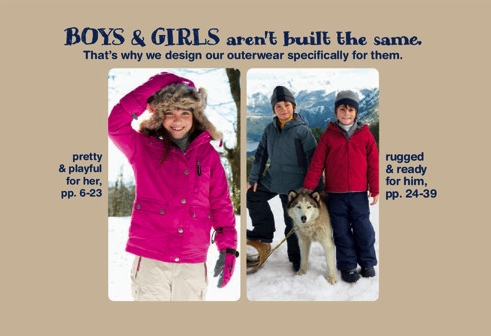
I have to add some commentary to this photograph as it is so biologically deterministic and reflective of our larger cultural values regarding the two sex-classes. First we can see the text claiming how "different" boys and girls really are. This seems to be intended to allow us to digest the text that appears next to each advertised photo. Next to the ad featuring the girl-child we read, "Pretty and Playful." This illustrates female's  perceived role and purpose as an object to be looked at and played with rather than respected. This girl is posed to look passive and playful as she has her hand on her head and she is smiling. However, look over to the boys and we see that they are described as "rugged and ready". Boys are brave, courageous and ready to take on the world, unlike the girls who are asked to merely smile and giggle. They are with a dog, too, to signify their bravery and so-called "boyishness." The posing is interesting, also as one of the boys has his knee raised to signify his "natural" bravery. His pose garners respect whereas the picture of the little girl is meant to garner "aww, how cute!" 


This is exactly what we're talking about when we say feminism has a LONG way to go...


and finally from the same Sociological Images post


Two Cents: 


Again, this photo illustrates roles based on biological deterministic beliefs about boys and girls. Boys like to learn and create and discover shit - girls like to take care of babies and change diapers full of shit. It's just the way it is.


A Place for Everywomon and her series on Radical Feminist Seminar 


Excerpt:


"Sheila Jeffreys gave a lecture related to her book, The Industrial Vagina. I had recently read through this entire book, a book so painful to read that I had to put it down every few minutes of reading, just to remind myself that, yes, I am safe, but this is why I am a radical feminist. One point Jeffreys hammered home, is that the idea of individual agency is fundamentally a conservative idea. At what other job do we claim workers are expressing their “agency”?  It is really Milton Friedman’s politics of super, super individualism that are being put forth by “pro-sex work” lobbyists."


Excerpt: 
"Another reason a switch to a pornography with a “feminist conscious” is not likely to happen is a reason rather hard to face: Men actually like getting off to women in pain. For example, Dines quotes a porn producer as saying, “Nobody wants to watch a girl enjoying anal.” Dines also mentioned that condoms are typically not used in heterosexual porn. According to her, this is because condoms show at least a minimum level of care about the women’s health. If porn showed men wearing condoms, that would be a reminder that women are human beings, who are capable of being hurt."


Excerpt: 

"Groups such as GenderPAC, a U.S. organization that ran from 1999-2009, are “gender protection rackets,” Jeffreys asserted, since GenderPAC thinks we all have a “right to our gender.”
A point I was not aware of–and quite horrified by–was that gender identity laws are not meant to protect born women. This is because there are apparently too many of us."


Sub-Human by Rmott62


Excerpt: 


"Sub-human that is an uncomfortable word, a word that you would do anything to avoid.
Sub-human is what the vast majority of the prostituted class are made. That sounds harsh, that is harsh.
The invention of the prostituted class was not a flux, was no mistake. It was invention that used slavery, capture of women and girls in times of disasters or wars, used that women are kept poor, used racism, used any and all oppression to create the prostituted class."

Silence Means Dissent - Andrea Dworkin from Anti-Porn Men Project


Excerpt: 

"We know that men like hurting us. We know it because they do it and we watch them doing it. We know that men like dominating us because they do it and we watch them doing it. We know men like using us because they do it, and they do it, and they do it, and they do it, and they do it. And men don’t do things that don’t like, generally speaking. They like doing it and they like watching it and they like watching other men do it and it is entertainment and pay money to see it and that one of the reasons that men make pornography. It’s fun."


Photograph of Andrea Dworkin found here

Wednesday, July 27, 2011

"The Breast Milk Baby" A New Doll Toy Marketed to Girl-Children


Photo found here


A toy doll marketed to girl-children has been creeping up during my internet browsing. The doll is intended to allow little girls to "pretend" to breast feed their baby doll, despite you know, not having breasts of their own. 

This toy is disturbing for many reasons, not because it deals with breast-feeding, but because it intentionally and quite obviously socializes girls to take the role of Mother to the next level. The toy doll is intended to "teach" little girls how to breast-feed, since of course, a girl's purpose in life is to get with a dude and have as many babies as possible. How often do you see toys such as this marketed to boys? This toy is not only gendered - it is biologically deterministic - it assumes girl-children should conform to their future "womanly-roles" set up by the dominant culture. These toys, like all toy dolls, further perpetuate gender roles and norms that are forced onto girl-children at an early age. However, this particular "milking" doll really establishes problematic assumptions about girlhood and womanhood. These assumptions could lead to more and more girl-children feeling pressured into being passive and socially compliant based on the idea that girls and women are "biologically" inclined towards child-rearing and "nurturing" behaviors. Toy dolls have always done this, but this toy takes biological essentialism to a whole new level.

photo found here

I want to add that I believe breast-feeding should be a socially-accepted act and it should not be looked down upon like it currently is in the West. Breast-feeding is seen as "gross" or "impolite" because women's bodies are constantly viewed as sex-objects rather than healthy bodies with real functions by the majority of society. Women's breasts are viewed as sexual objects and thus are hidden away to keep the men from finding them "repulsive" because they are feeding another human being. This bothers people in the West, men and women alike, because women's breasts are considered a strictly sexual body-part - not one that has a vital function. The Western view of breasts are similar to the views of women's genitalia. Women's genitalia is viewed predominately as a hole that receives a man's junk and delivers a man's child. That sounds harsh, but look at a lad's mag and tell me different. How many men even know the term "vulva?" 

Women's genitalia are not viewed as organs with functions but rather as holes. This is why we never hear "vulva" but only "vagina" when discussing women's genitals. But, I digress. Despite my feelings on breast-feeding, I have to admit that there is something very, very disturbing about attempting to force girl-children into this activity before they even develop their own breasts or sense of bodily autonomy. 

I would like to hear from readers about this toy, what do you think this toy says about society, marketing and gender roles? 


Oh, and here's the advertisement for the doll 


Total Pageviews